
A tree crew from Stuart, for Stuart
Stuart Tree Services is a small, locally run tree company. We take down, trim and clean up trees for homeowners, HOAs and small businesses in Stuart and across Martin County, from North River Shores down to Hobe Sound and out to Indiantown. We've been doing this for more than 35 years. The person who walks your yard at the estimate is part of the same crew that comes back with the saws, which is why the price and the plan don't change between the two visits.
We started this company because tree work around here has a reputation problem. Most people have a story about a crew that left a lawn rutted, a stump half-ground or a pile of logs by the street. Our whole approach is the opposite: plan the job before the first cut, protect what's under the tree, and leave the yard cleaner than we found it.
One owner, one crew, since 1990
This business has been under the same owner since 1990, and the crew is kept small on purpose: a handful of people who know each other's calls on a rope. The owner still looks over the work, so the standards on a $200 palm trim are the same as on a crane removal.
Those standards are written down, not improvised. Every pruning cut follows ANSI A300, the national standard for how much to take and where to cut so a tree seals the wound. Every climb and every drop zone is run under ANSI Z133, the safety code for tree work. Before hurricane season we do storm-prep pruning, thinning heavy crowns so wind passes through; after a storm we do restoration pruning on the trees that can be saved instead of writing them off. We also inject palms against lethal yellowing, the disease that kills coconut and other susceptible palms across South Florida, and we take out invasive vines that strangle oaks along fence lines.
Sand, salt and hurricane season
Trees in Martin County grow in conditions that would surprise someone from up north. The soil is mostly sand, so roots spread wide and shallow instead of deep. Salt spray along the Indian River Lagoon and the St. Lucie burns leaves and weakens limbs on the water side. Summer brings an afternoon storm most days, and hurricane season runs six months of the year. Stuart learned what that means in 2004, when Frances and Jeanne came ashore three weeks apart and left whole neighborhoods under fallen oaks and pines.
So we pay attention to things that matter here: root plates lifting in wet sand, laurel oaks that look fine until they split, Australian pines with no anchor at all, and queen palms starving in poor soil. Knowing which local trees fail, and how, shapes every recommendation we make.
Rope, not gravity
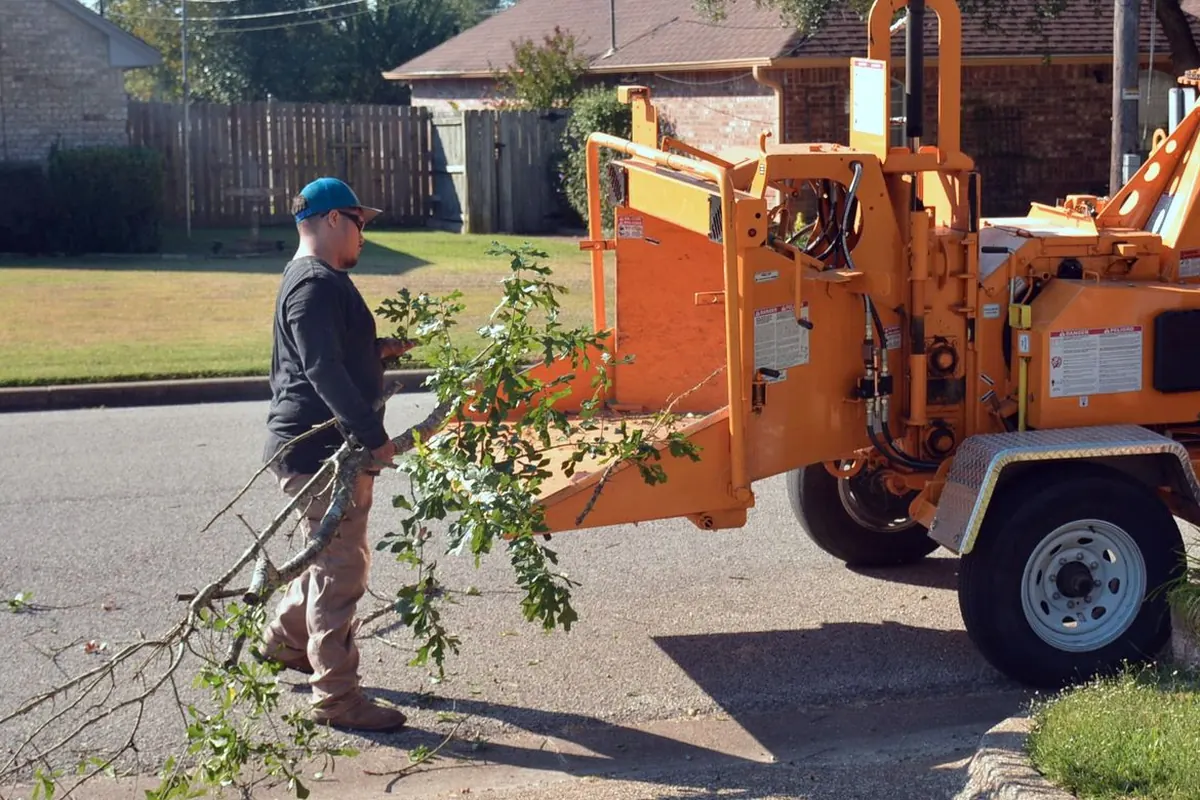
Most residential trees in Stuart can't simply be felled. There's a house, a pool cage, a dock or a neighbor's fence in the way. We take those trees apart from the top: a climber ties off each limb, the ground crew lowers it on a rope run through a block above the cut, and the trunk comes down in short rounds that land where we've planned. When a tree is too hollow to climb or too heavy over a roof, we bring in a lift or a crane rather than take a chance.
On the ground, plywood and mats go under every machine so sandy lawns don't rut. Brush goes straight into the chipper. Logs are cut to a size we can load or that you can keep for the fire pit.
What we refuse to do
- Top trees. It's cheap, it looks terrible within a year, and it makes trees more dangerous, not less.
- Hurricane-cut palms. Stripping a palm to a few fronds weakens it. We leave the green canopy on.
- Spike-climb trees we're not removing. Climbing spurs wound living trees. They're for removals only.
- Work near energized lines that belong to the utility. FPL makes those safe first.
- Talk you into a removal a good trim would solve. A healthy shade tree is worth more standing.
- Change the price on the day unless you add work.
From the first call to the last rake
You call or send the form. We call back to set up a time to come out, usually within a day or two, and nobody arrives unannounced. At the visit we walk the yard with you, look at the tree, the access and what's underneath, and talk through the options. You get a written price that spells out the method, the cleanup and anything optional, like stump grinding, on its own line.
On the day, the crew arrives when we said it would, sets up protection, does the work and then rakes, blows off and walks the property with you before leaving. If something isn't right, we fix it then.
How a price gets written
We price by the job, never by the hour. The number comes from the size of the tree, the method it needs, the access, the time on site and the disposal. You'll find our typical ranges on the price guide, published so you can budget before anyone visits. Ask us, or anyone else, for liability and workers' compensation certificates sent straight from the insurance agent before work starts. It's the single best filter for a tree company.
Homes, HOAs and small businesses
Most of our work is for homeowners: a dead pine, an oak over the roof, palms around the pool. We also work for HOAs and property managers who need communal trees and palms kept on a schedule, and for small commercial properties whose parking-lot trees need lifting clear of signs and trucks. Builders call us for lot clearing before a slab and stump grinding after.
The details people ask about
- Where we work: Stuart, Palm City, Jensen Beach, Sewall's Point, Port Salerno, Hobe Sound, Rio, North River Shores, Hutchinson Island and Indiantown.
- When to call: The emergency line is answered around the clock, and routine calls are returned the same day.
- Estimates: free, written and with no obligation.
- Storms: emergency work is triaged by danger, with trees on occupied homes first.
Last reviewed October 8, 2026.